
INTERRELIGIOUS ENCOUNTERS AND PREJUDICE REDUCTION
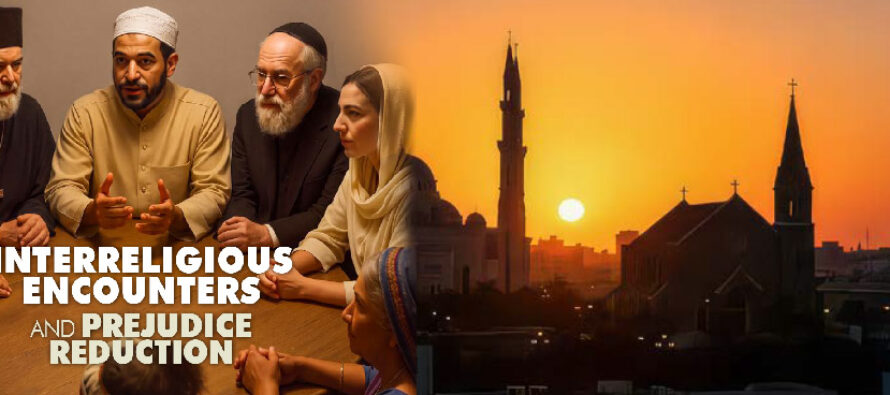
Is it possible to change negative prejudice through interreligious encounters? Can human beings change their own perceptions and adopt a new set of beliefs about others? From religious and educational perspectives, the answer to both questions is clearly yes. In fact, this is a principle common to all faith traditions and educational approaches: change is possible.
Human relations are determined mainly by perceptions, as social science theories have repeatedly shown. Our perceptions are formed from an early age through our cycles of interaction with parents, peers and other adults around us. The more we are exposed to different perspectives over the course of our lives, the less likely we are to develop an absolutist view of the world—that is, the more likely we are to make space in our own thinking and beliefs for other possible views.
Related Articles
HUMANISING THE ‘OTHER’ CONFLICT TRANSFORMATION IN SRI LANKA
Dialogue is not simply the exchange of opinions. True dialogue begins when we are willing to listen to life stories
A PHENOMENOLOGY OF RACE THE EMBODIED LIFE OF PREJUDICE
I show the importance of understanding how anti- Black prejudices are not simply doxastic, and how transforming a world of

CHALLENGING THE ‘IDEAL VICTIM’
Drawing on qualitative research conducted in Mexico as part of our project within the Jesuit University System (SUJ), this article
